
The Sistine Chapel in short
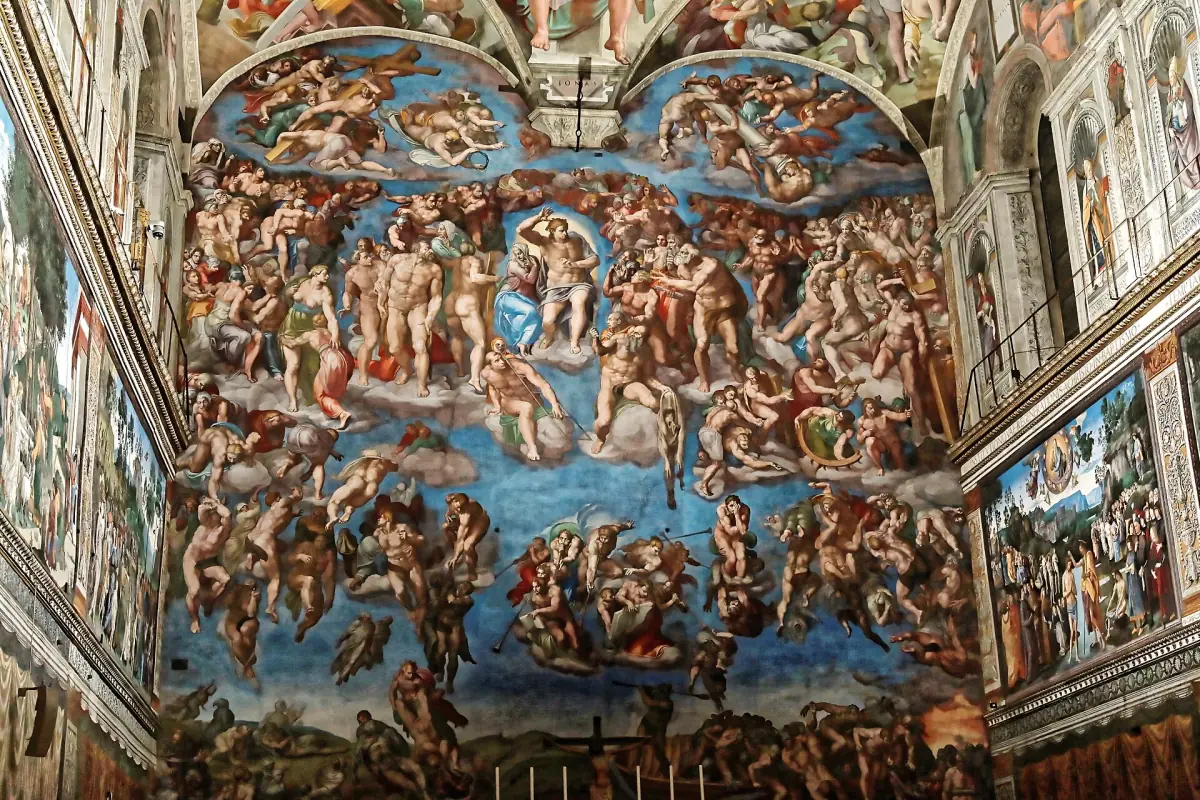
The Sistine Chapel is a chapel in the papal palace that you reach at the end of the museum route. Michelangelo was given the job of painting the ceiling in 1508, and the finished painting was unveiled on 1 November 1512. The Last Judgment on the altar wall was painted later, between 1536 and 1541.
The chapel is not a separate attraction with its own ticket. Your museum entry ticket includes it on the day of your visit. Inside, photos and films are forbidden, mobile phones are not to be used and visitors keep silent.
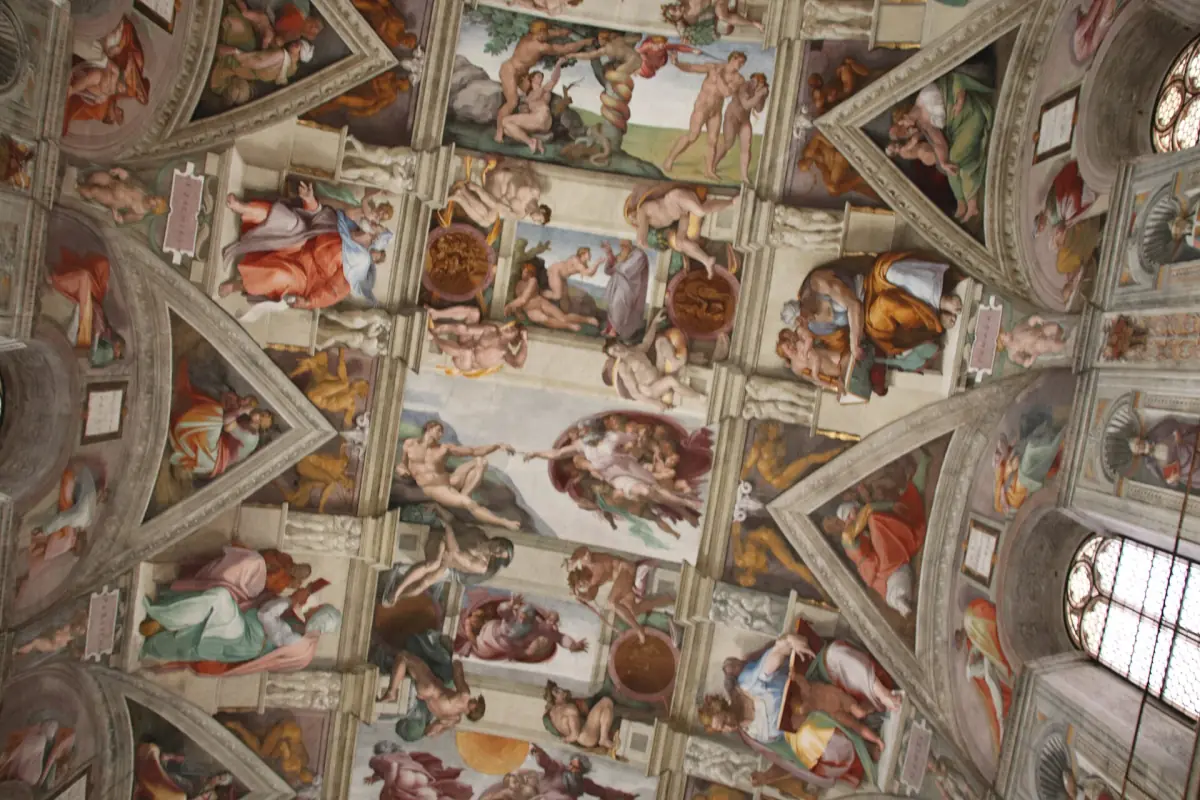
The ceiling
Stories from Genesis, painted in four years.
The central theme of the ceiling is the stories of Genesis. Michelangelo painted it from 1508 to 1512, and the chapel was opened with the finished decoration on 1 November 1512. It is worth knowing that the chapel was decorated before Michelangelo started. The first phase of painting dates from 1481 to 1483, so the walls and the ceiling are not the work of one artist.
The ceiling is made of many separate scenes, so it rewards a slow look. A guide can point out the stories one by one, which is a reason to consider a tour.
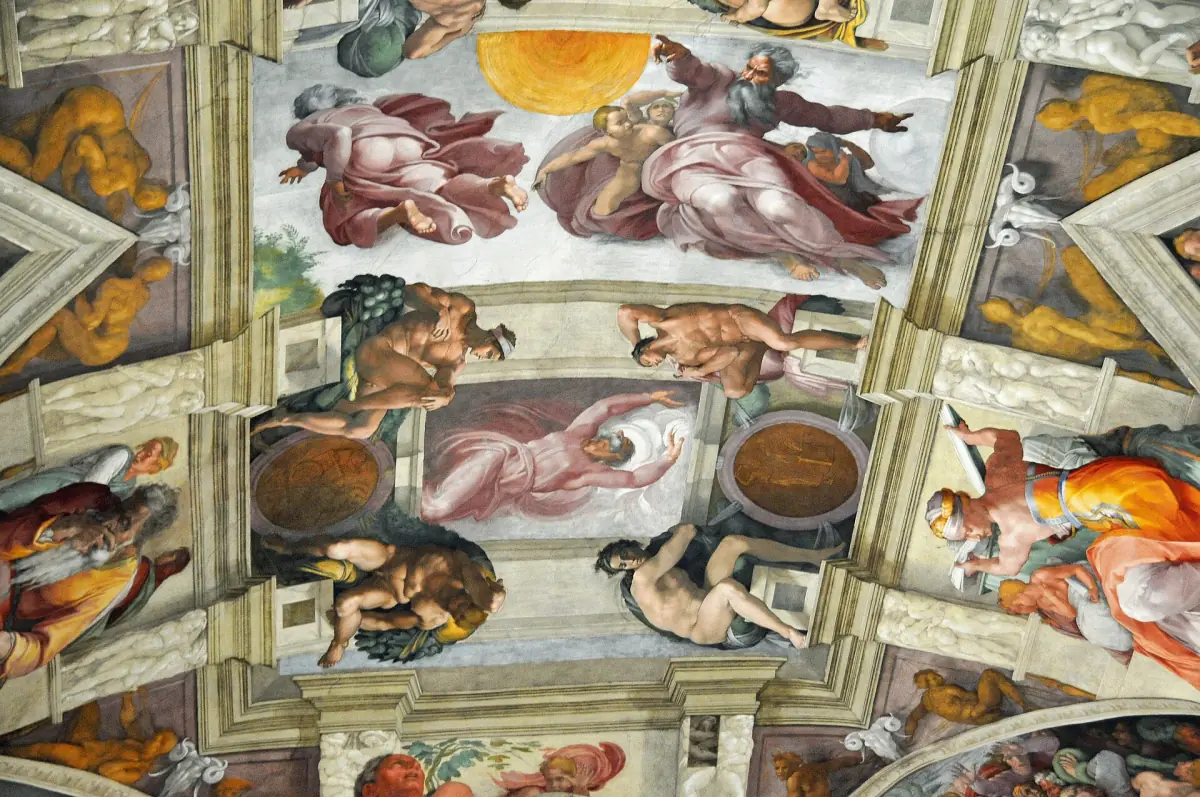
Take your time
Read about the main scenes before you go in, because the chapel is a place for quiet looking, not for explanations. A guide gives the background before you enter.
Our picks: Sistine Chapel visits
A licensed guide for the chapel, a tour with museum guide and an early tour that continues to St Peter's.
Hand-picked tours, booked through GetYourGuide. Prices are indicative starting prices in euros (as of October 2026). Tap a tour for live availability and the current price in your currency.
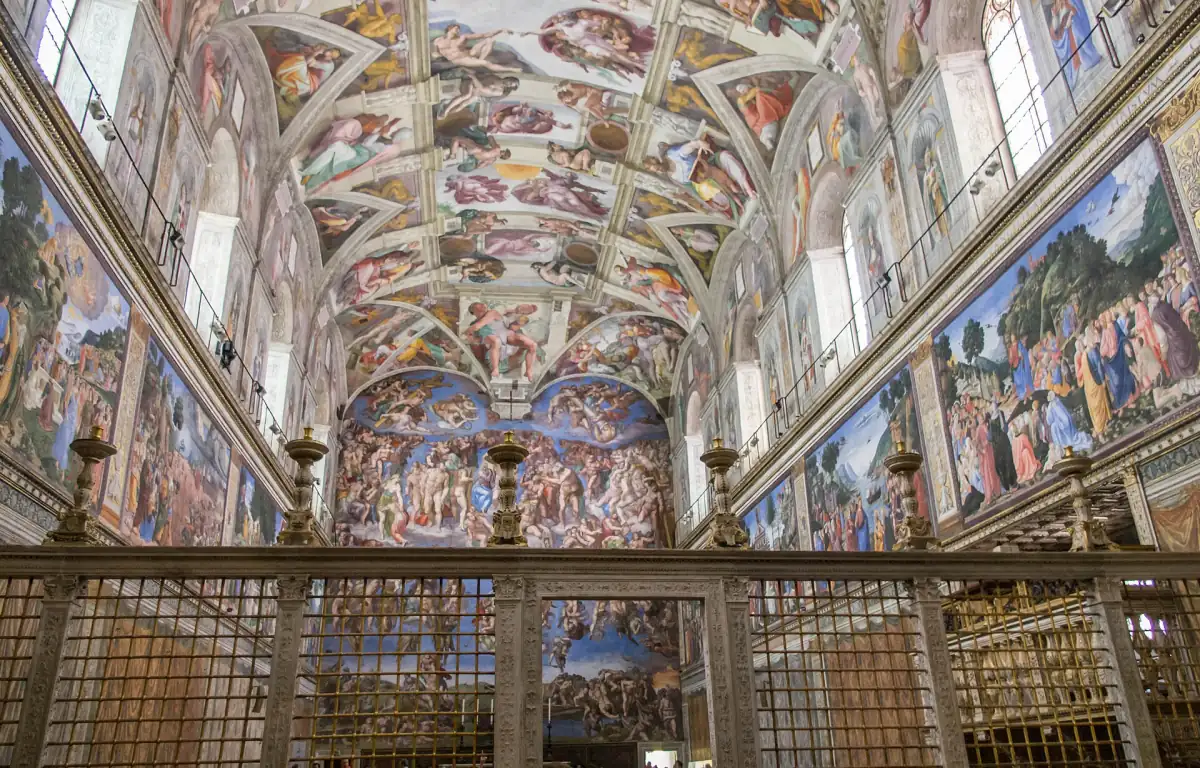
Early entry with a guide through all three sites
The earliest entry, an English-speaking guide, a direct passage to St Peter's and the reservation fees.
Check availability →Sistine Chapel and museums with a licensed guide
A licensed guide for the museums and the Sistine Chapel, with headsets. St Peter's comes only with the matching option, and there is no guided tour inside the basilica.
Check availability →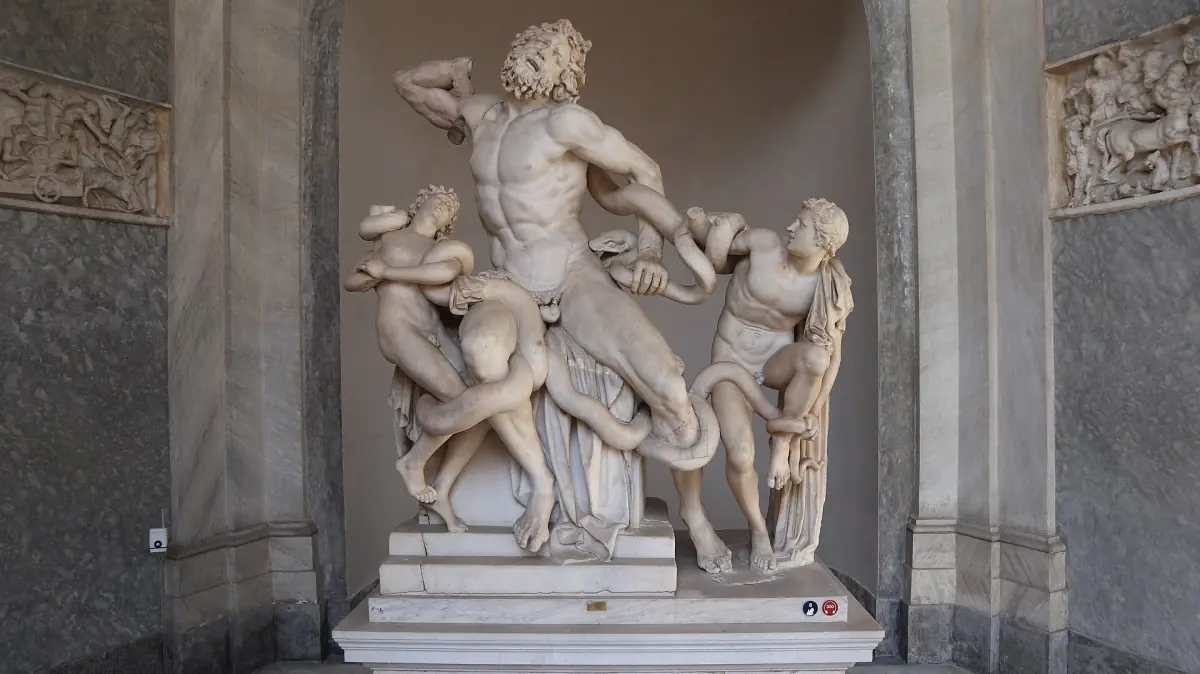
Museums tour with an official museum guide
Entry without the ticket queue, the museum ticket and a guide from the Vatican Museums.
Check availability →Sistine Chapel tours and tickets
Guided visits, small groups and early-entry options that include the Sistine Chapel, with live prices and availability.
The Last Judgment
The altar wall is a different work from the ceiling.
The Last Judgment fills the wall behind the altar. It was painted between 1536 and 1541, about two decades after the ceiling. Do not mix up the two when you read or plan: the ceiling shows Genesis, and the altar wall shows the end of time.
Look at both works before you leave, and keep enough time in your plan for them, because the chapel comes at the end of a long route.
Rules inside the chapel
Respect the room and the people in it.
No photos or films
Photography and filming are forbidden, and phones are not to be used inside.
Silence
The chapel is a place for silence. Information is given before you enter, so read or hear the explanation first.
Dress code
Shoulders must be covered and knees too. Read the dress code before you go.
Security
Metal detectors apply to everyone, including visitors with a ticket booked online.
Planning your visit
The chapel comes at the end, so plan the day around it.
The Sistine Chapel is open during the normal hours of the museums, Monday to Saturday from 08:00 to 20:00, with the last entry at 18:00. Check the opening hours and the ticket prices before you book. A route through the museums with the Raphael Rooms before the chapel is described on the Raphael Rooms page.
The chapel comes after a long walk, so keep some energy and time for it. Enter the museums early enough to reach it well before the rooms clear, which happens 30 minutes before closing. The security check at the entrance applies to everyone, so allow time for it before the route begins.
Do not plan on a shortcut from the chapel to St Peter's Basilica, and do not count on joining another group to get there. Whether a passage is open depends on your booking and the current rules. The basilica has its own entrance, and the Sistine Chapel guide on the St Peter's side adds more.
Before and after the chapel
The route that leads to it.
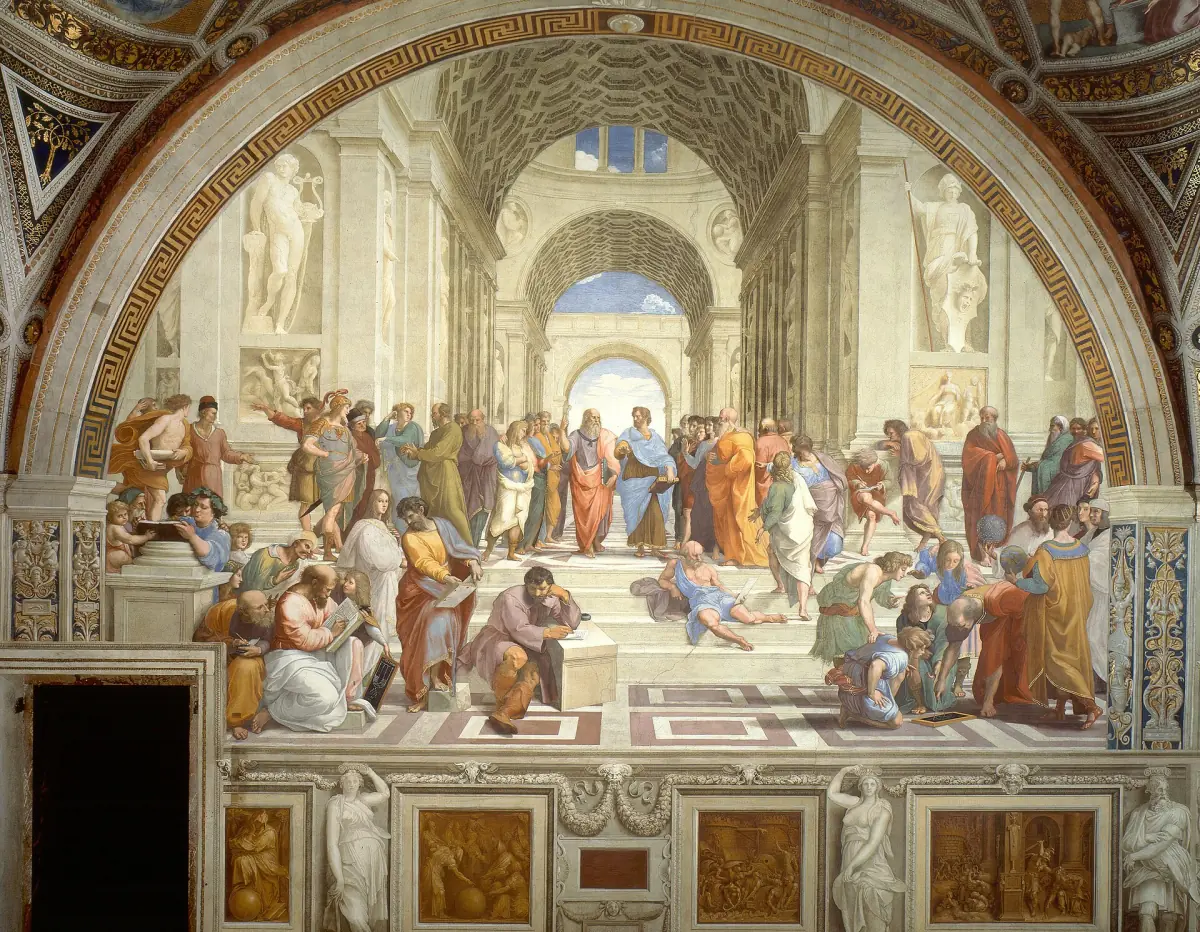
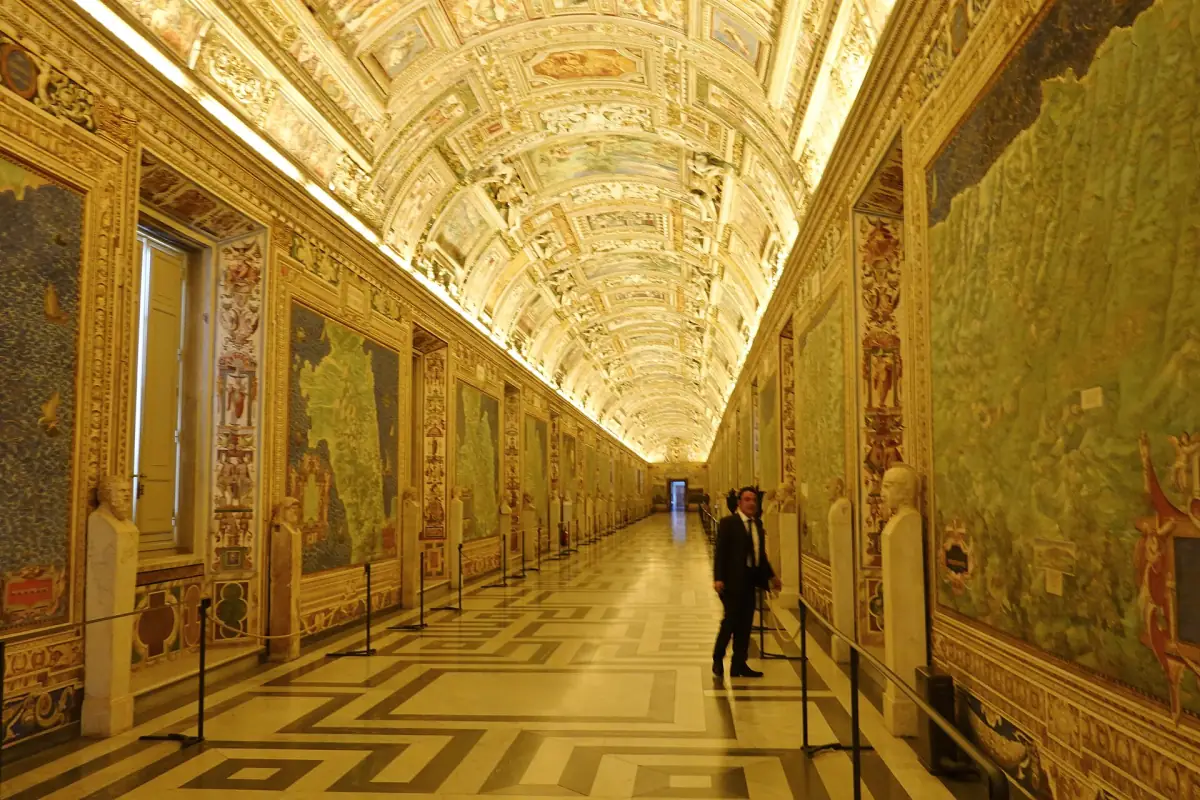
A common route runs from the Pigna Court through the ancient sculpture and the Candelabra and tapestry galleries to the Gallery of Maps and the Raphael Rooms, and ends in the Sistine Chapel. Michelangelo started the ceiling in 1508, the same year in which the painting of the Raphael Rooms began. Raphael and his workshop worked there until 1524, so the two sets of rooms show the same moment in Rome from two different hands.
Sistine Chapel: frequently asked questions
Do I need a separate ticket for the Sistine Chapel?
No. The museum entry ticket includes the chapel. The entry ticket is the only general ticket for it, so a listing with the chapel in its name is a tour or a package that includes the same entry.
Can I take photos in the Sistine Chapel?
No. Photos and films are forbidden, and you must be silent and keep your phone away. Elsewhere in the museums you can take private photos without a flash.
Who painted the Sistine Chapel?
Michelangelo painted the ceiling between 1508 and 1512 and the Last Judgment between 1536 and 1541. The chapel had been decorated earlier, in the years 1481 to 1483, so it is not all by Michelangelo.
How long should I stay in the chapel?
There is no fixed time. Plan to look at the ceiling and the altar wall, and leave room for the crowd. Entering late in the day shortens the time you have.
Do I need to dress in a special way?
The museum dress code applies in the chapel. Shoulders and knees must be covered, and hats, miniskirts and low-cut or sleeveless tops are not allowed. The dress code page has the full list.
Do I need a guide for the chapel?
No, but a guide can explain the scenes before you go in, and the chapel is a place for silence once you are inside. Compare the options on the tours page.